 My Cart


 My Cart


Message

Email
order@sanyoubio.com
Email

Tel
+86 21 3368 1627
Tel

Antibody conjugated drug (ADC)
Background
Product Features
ADC VS ADC PLUS
Product List
QC Data
Background
Antibody Drug Conjugate (ADC) serves as a precise delivery system in cancer treatment, coupling monoclonal antibodies with toxin drug small molecules (Payloads) via linkers. By leveraging the targeting precision of antibodies and the potent killing capacity of payloads, ADC plays a pivotal role in cancer drug research and development. Upon entering the bloodstream, ADC can partially recognize and bind to tumor cell surface-specific antigens. It gets internalized by tumor cells to form early endosomes, which mature into late endosomes and eventually fuse with lysosomes. Subsequently, chemical reactions or enzyme lysis result in the release of an effective payload that targets DNA or microtubules, leading to tumor cell apoptosis.
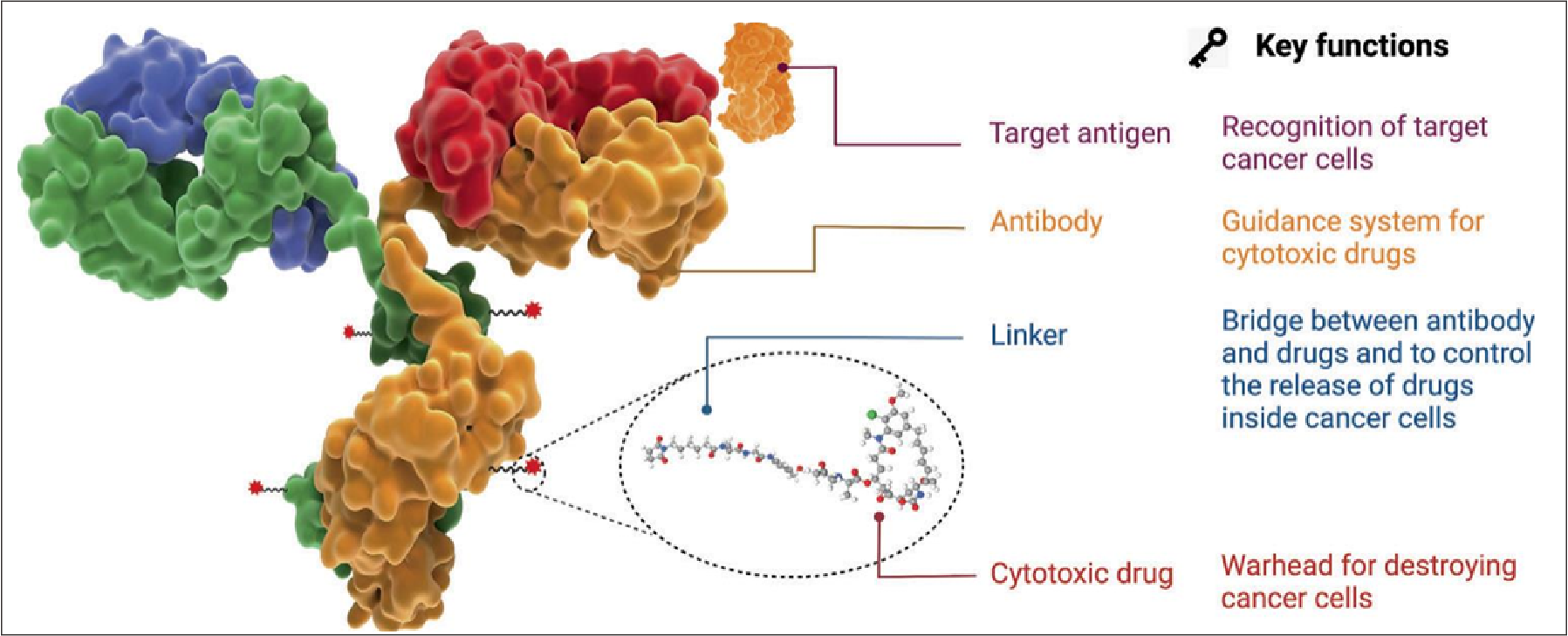
ADC Structure
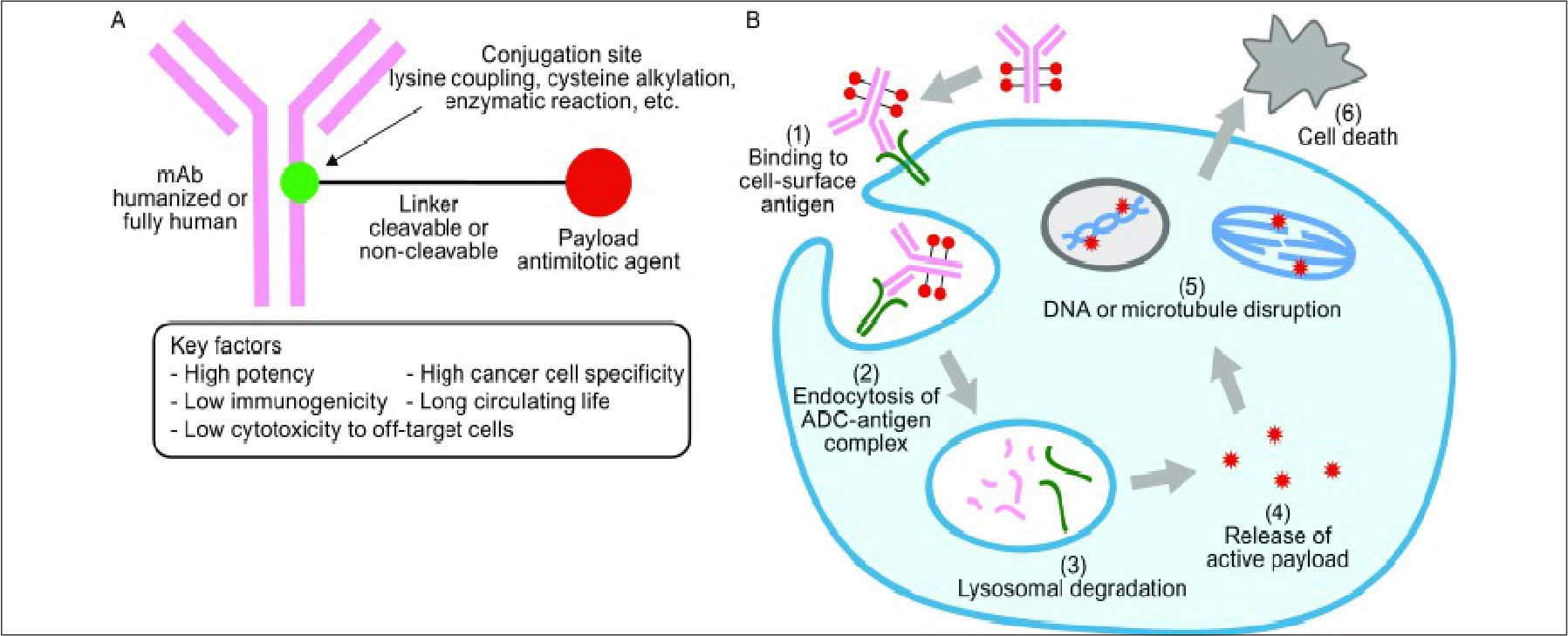
MoA of ADC
The concept of ADC drugs was first proposed as early as 1900, but technical limitations kept it largely theoretical level for many years. The world's first ADC drug, Mylotarg, received approval in 2000 but was delisted in 2010 due to significant side effects. However, with the accumulation of clinical trial data, Mylotarg was re-approved by the FDA in 2017. In recent years, the field of ADC has experienced accelerated innovative development, driven by ongoing target research, advancement in payloads, and protein engineering within the pharmaceutical industry. Presently, a total of 15 ADC drugs have received approval.
Product Features
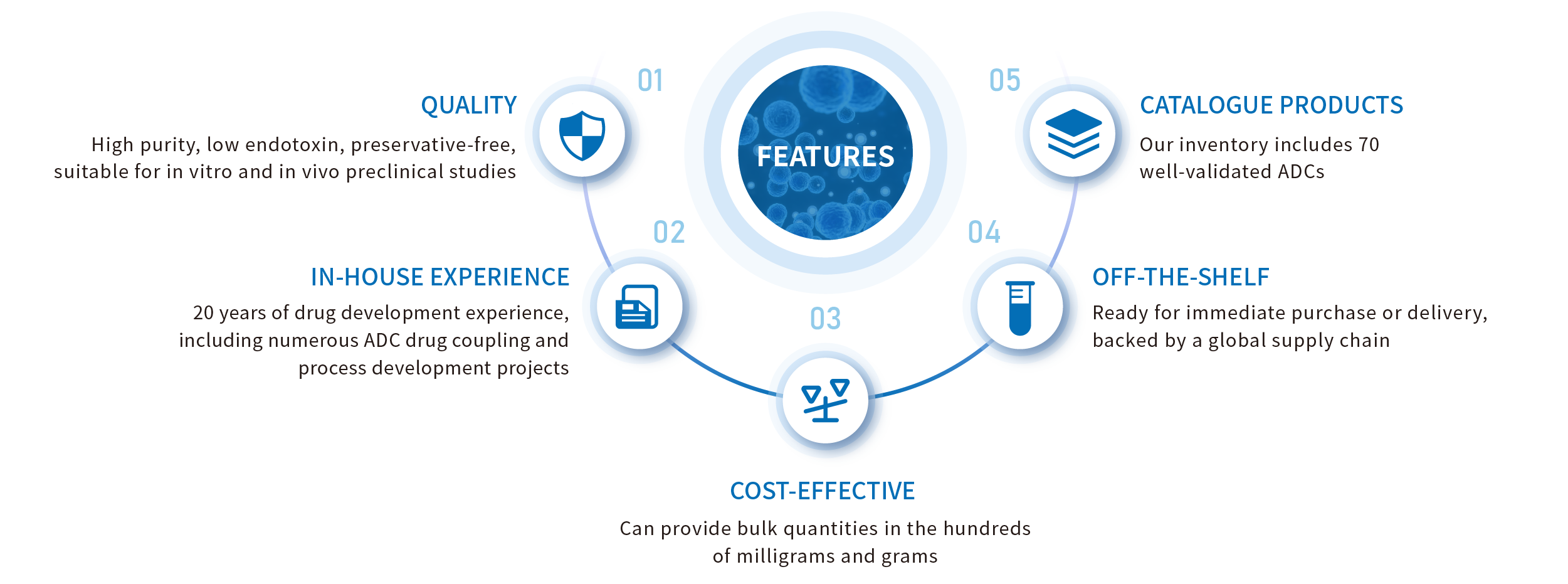
To date, ADC drug development continues to expand. Sanyou utilizes our cutting-edge ADC Coupling Technology platform to meet market demand, manufacturing high-quality products. We introduce ADC PLUS products, ensuring enhanced quality for efficacy and reliability. Our aim is to empower researchers and clinicians in their search for improved cancer therapies by providing research tools to enhance their work.
ADC VS ADC PLUS
Type
ADC
ADC PLUS
Purity: SDS-PAGE
>90%
>95%
Purity: SEC-HPLC
>90%
>95%
Endotoxin
<1 EU/mg
<1 EU/mg
Free Drug
<0.1%
<0.1%
DAR value
√
√
Azide- and carrier protein- free
√
√
Lyophilization
-
√
Bulk packaging
-
√
ELISA binding assay
√
√
FACS binding assay
-
√
Cytotoxicity assay
-
√
Product List
Catalog
Product Name
Target Name
Conjugation
DAR
Isotype
CHB380
Lonigutamab-MMAE
IGF-1R
MMAE
3-4
IgG1/ kappa
CHB376
Gemtuzumab-MMAE
Siglec-3 / CD33
MMAE
3-4
IgG1/ kappa
CHB612
Loncastuximab tesirine
CD19
SG3199
2-3
IgG1/ kappa
CHB439
Zanidatamab Zovodotin
HER2 & HER2
ZD02044
2-3
IgG1/ kappa
QC Data
Reference antibody are invaluable research tools for researchers and clinicians, facilitating benchmarking and assessment of experimental stability, accuracy, and reproducibility through comparison with reference antibodies. This aids researchers and clinicians in identifying suitable positive controls to strengthen the credibility and effectiveness of their research data.
Purity : SEC-HPLC

The purity of the Zilovertamab vedotin is greater than 98%.
Purity : HIC-HPLC

The drug-to-antibody ratio (DAR) of the Zilovertamab vedotin is 3.7.
Bioactivity : FACS

Zilovertamab vedotin shows high affifinity activity at the cellular level.
Internalization Assay

Zilovertamab vedotin shows high internalization activity on HT29 cells.
Cytotoxicity Assay

Zilovertamab vedotin shows high cell killing activity on HT-29 cells.
In Vivo Efficacy Evaluation

Zilovertamab vedotin shows high tumor killing ability.
Social Media


Home

Online Chat